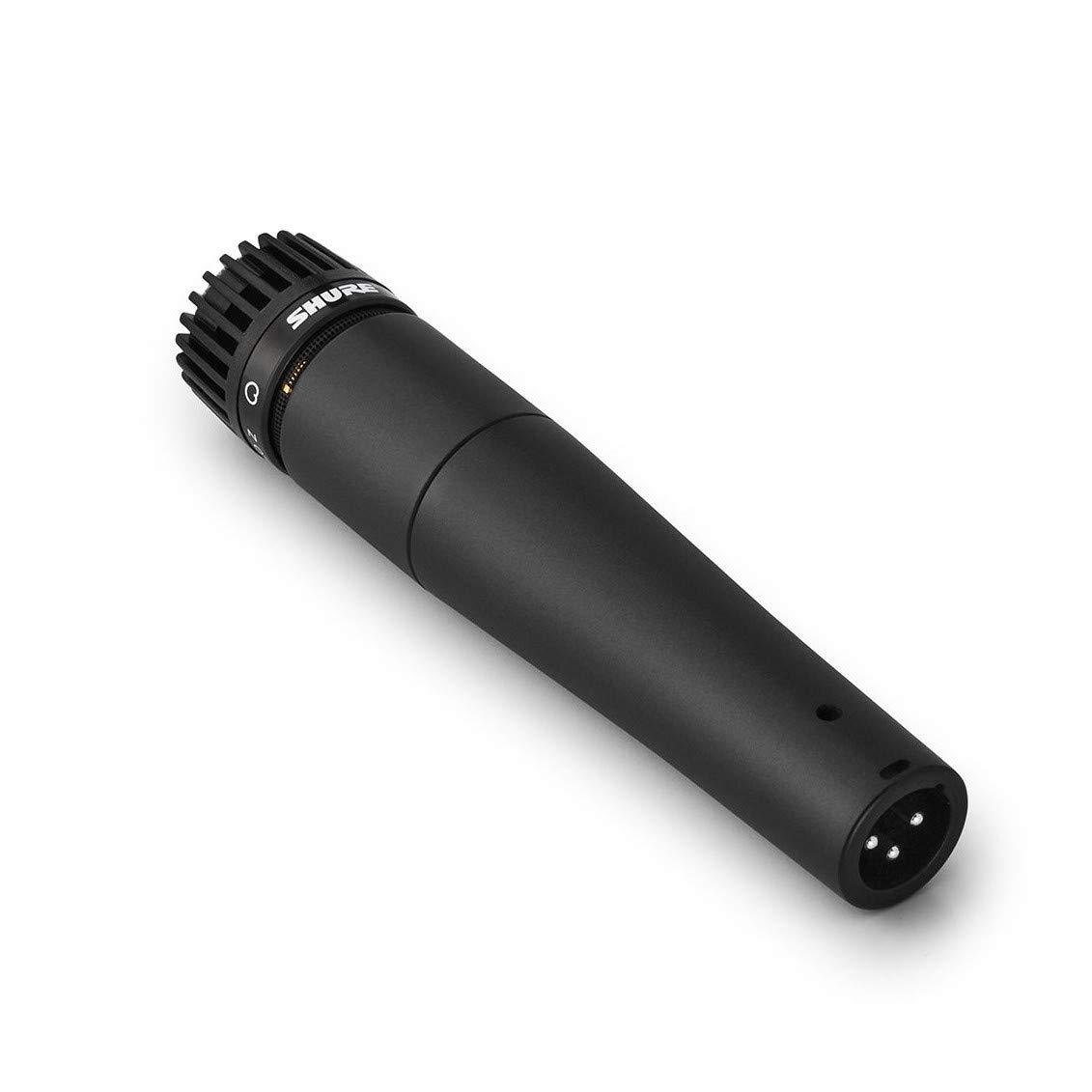
Shure SM57 Microphone
As an Amazon Associate I earn from qualifying purchases.
Capturing the sound of a guitar amplifier is one of the most satisfying parts of home recording. The challenge is finding a microphone that can reproduce the character of the amplifier without introducing unnecessary complications.
The Shure SM57 Instrument Microphone has been a familiar presence in recording studios and on stages for decades. Its simple design, rugged construction and focused sound have made it a trusted choice for recording electric guitar amplifiers, drums and other instruments.
Unlike microphones filled with electronic features, the SM57 concentrates on one task: capturing the sound placed in front of it.
For guitarists building a home recording setup, that simplicity is a considerable part of its appeal.
Why it works for recording guitar amplifiers
A guitar amplifier produces a sound shaped by the amplifier circuitry, speaker and cabinet.
Recording that sound accurately requires a microphone capable of handling the volume and tonal characteristics of a guitar speaker.
The Shure SM57 uses a dynamic moving-coil capsule with a cardioid pickup pattern. This allows it to concentrate on sound arriving from the front while reducing unwanted sound from behind and around the microphone.
Its frequency response extends from 40Hz to 15kHz, with a carefully shaped presence rise that helps emphasise definition in the upper midrange.
For electric guitar recording, this can be particularly useful.
Distorted rhythm guitars often need enough midrange presence to remain clear alongside bass and drums. The SM57’s response can help capture the attack of the guitar without requiring extensive processing.
It is also comfortable working close to loud guitar speakers, where the sound pressure can be considerable.
The microphone doesn’t need batteries or phantom power. Instead, it connects through a conventional balanced XLR cable to a suitable microphone preamp, mixer or audio interface.
For home recording, an interface such as the Audient iD4 MKII USB-C Audio Interface provides a practical way to connect a microphone to a computer.
The combination of a good microphone, capable preamp and careful positioning can produce results that remain useful long after other studio equipment has been replaced.
What it feels like to use
The SM57 has a straightforward, purposeful appearance.
Its dark-grey die-cast steel body, polycarbonate grille and stainless-steel screen give it a substantial construction that feels more like traditional professional equipment than a lightweight plastic accessory.
At approximately 284 grams, it has a reassuring weight without being particularly cumbersome.
The narrow cylindrical body is easy to position on a conventional microphone stand, and its compact grille makes it practical for placing close to a guitar cabinet.
There are no buttons, displays, batteries or menus to navigate.
Once connected to a suitable audio interface, operation largely involves adjusting the microphone position and setting an appropriate recording level.
This simplicity is particularly welcome when recording guitar.
Instead of spending time navigating software controls or changing microphone settings, the guitarist can concentrate on the amplifier and the performance.
The SM57 includes an internal pneumatic shock-mount system designed to reduce handling noise.
Its solid construction also makes it suitable for musicians who regularly transport their recording equipment between rehearsal rooms, home studios and live venues.
However, durable construction shouldn’t be confused with indestructibility. The grille and internal components still require sensible handling.
Microphone positioning makes the difference
One of the most interesting aspects of recording a guitar amplifier is how much the sound changes when the microphone moves.
Placing an SM57 close to the centre of a guitar speaker generally produces a brighter, more direct sound.
Moving it gradually towards the outer part of the speaker cone often creates a warmer, less aggressive tonal balance.
Even relatively small adjustments can make a noticeable difference.
A sensible starting position is close to the speaker grille, aimed near the area where the dust cap meets the cone.
From there, the microphone can be moved gradually while listening to the recorded sound.
Angling it slightly away from the centre may also help soften excessive high-frequency bite.
These adjustments are particularly useful when recording distorted electric guitars, where too much upper-midrange energy can make a recording sound harsh.
The SM57’s focused pickup pattern helps reduce unwanted background noise, although it doesn’t eliminate the sound of the room entirely.
A loud amplifier will still interact with its surroundings, and reflections from nearby walls or hard surfaces can influence the recording.
For guitarists wanting a different approach to microphone placement, the Sennheiser e906 Dynamic Microphone offers a flat-front design and switchable presence settings.
The SM57 takes a more traditional approach, rewarding careful positioning rather than offering built-in tonal adjustments.
A practical microphone for home recording
The SM57’s usefulness extends beyond electric guitar amplifiers.
It can also record snare drums, percussion, acoustic instruments and certain vocal performances.
This flexibility makes it particularly attractive for musicians gradually developing a home studio.
A guitarist might begin by recording an amplifier, then use the same microphone for percussion or additional instruments when building a complete song.
Its cardioid pickup pattern can help when recording individual instruments in less-than-perfect acoustic environments.
However, microphone placement, room acoustics and recording technique remain important.
Good monitoring is equally valuable.
When judging microphone position, headphones that reveal changes in tone can help prevent unnecessary recording adjustments.
Our article on the beyerdynamic DT 770 PRO X Studio Headphones explores a closed-back monitoring option for home recording.
The SM57 doesn’t contain digital processing or recording features of its own. Its job is to deliver an analogue microphone signal to the recording system.
That makes it a straightforward component in a larger setup rather than a complete recording solution.
The drawbacks
The Shure SM57 has an excellent reputation, but that doesn’t mean it is automatically the best microphone for every guitarist or recording situation.
Several limitations deserve careful consideration.
It requires additional recording equipment.
The SM57 uses a professional three-pin XLR connection rather than USB.
Anyone expecting to connect it directly to a laptop and begin recording will need additional equipment.
A suitable audio interface or microphone preamp is required, along with an XLR cable and recording software if the aim is to capture performances on a computer.
A microphone stand and appropriate clip are also needed for secure positioning.
For someone beginning home recording from scratch, the complete setup involves more than purchasing the microphone itself.
Its output level is relatively low.
As a passive dynamic microphone, the SM57 produces a lower signal level than many active condenser microphones.
When positioned close to a loud guitar amplifier, this is generally manageable with a suitable preamp.
However, quieter acoustic instruments, softly spoken vocals and distant sound sources may require considerably more microphone gain.
A recording interface with insufficient clean gain can introduce audible noise when the input level is increased.
An additional microphone preamplifier or inline gain booster may be useful in some situations, although it isn’t automatically necessary for ordinary close-miked guitar cabinets.
The sound isn’t completely neutral.
The SM57 has a deliberately shaped frequency response with a noticeable presence emphasis.
This can help electric guitars sound focused and defined, particularly in a busy recording mix.
However, the same characteristic may exaggerate the sharpness of an already bright amplifier or speaker.
Guitarists looking for a particularly smooth, full-range recording might prefer a different microphone or combine the SM57 with another suitable microphone.
The SM57 is also not designed to reproduce the extended high-frequency detail associated with some studio condenser microphones.
For delicate acoustic guitar recordings, where subtle string harmonics and room ambience are important, another microphone design may be more appropriate.
Positioning requires patience.
Although the SM57 is simple to connect, achieving the desired recorded sound isn’t always immediate.
Small changes in distance, angle and position across the speaker can alter the tonal balance.
A microphone placed directly in front of the brightest part of a speaker may produce an unnecessarily harsh recording.
Moving too far away introduces more room sound and can reduce the sense of immediacy.
This isn’t a fault with the microphone. It is part of the practical technique involved in recording a physical guitar amplifier.
Nevertheless, anyone expecting identical results regardless of placement may find the process frustrating.
It doesn’t eliminate background noise.
The cardioid pickup pattern provides useful rejection of unwanted sound, particularly from behind the microphone.
However, it cannot completely remove room reflections, mechanical noise or other instruments playing nearby.
Poor room acoustics can still affect recordings, particularly when the microphone is positioned farther from the sound source.
A suitable room and thoughtful placement remain important.
There are no onboard controls.
Unlike certain specialist instrument microphones, the SM57 doesn’t include a switchable presence filter, low-cut switch or attenuation pad.
Any necessary tonal adjustments must be made through positioning, the recording system or later audio processing.
This simplicity improves reliability, but it also means that the microphone offers little direct control over its sound.
It needs a secure stand or mounting arrangement.
The conventional cylindrical shape works well with a microphone stand, but the SM57 isn’t designed to hang flat against a guitar cabinet in the same way as certain purpose-built amplifier microphones.
In a cramped home studio or on a small stage, another stand and cable can become inconvenient.
Careful placement also matters to avoid accidentally knocking the microphone against the speaker grille or cabinet.
It isn’t always the ideal choice for vocals.
Although the SM57 can be used for singing and spoken-word recording, its compact grille offers less protection from breath blasts than microphones designed specifically for vocals.
An additional pop filter or suitable windscreen may be required for close vocal work.
For someone whose main interest is recording singing rather than instruments, a dedicated vocal microphone may be a more natural choice.
Finally, its popularity creates a purchasing consideration.
The SM57 is a widely recognised microphone, and counterfeit examples have appeared in the marketplace.
Buying from a reputable authorised seller and checking the supplied product carefully is sensible.
The microphone’s appeal comes from its established design and dependable performance, not from sophisticated features.
For musicians who need digital connectivity, built-in processing or unusually detailed acoustic recordings, another product may be better suited to the task.
Who it suits best
The Shure SM57 is particularly well suited to electric guitarists who want to record the actual sound of their amplifier and speaker cabinet.
It makes sense for home-studio musicians who value reliable equipment, simple operation and the flexibility to experiment with microphone placement.
It is also a sensible choice for players who record drums, percussion or other instruments alongside guitars.
The durable construction suits musicians who regularly transport their equipment between different locations.
However, anyone looking for a complete plug-and-play recording system should consider the additional equipment needed before choosing an XLR microphone.
Guitarists who prefer silent recording through amplifier-modelling software may find that a microphone isn’t necessary for their usual workflow.
For more microphones, audio interfaces and useful recording equipment, explore our Recording & Studio category.
Is it worth the studio space?
The Shure SM57 remains a compelling option because it concentrates on the fundamentals of instrument recording.
Its rugged metal construction, focused cardioid pickup pattern and distinctive frequency response make it particularly useful for capturing electric guitar amplifiers.
There are compromises.
It requires a suitable recording setup, careful positioning and sufficient preamp gain. Its sound character also won’t suit every instrument or recording preference.
Yet these limitations don’t diminish its usefulness when matched to the right application.
For guitarists who enjoy working with real amplifiers and want a dependable microphone that can remain part of their recording equipment for years, the SM57 is a practical, well-established choice.
It doesn’t promise to make every recording sound perfect. Instead, it provides a reliable starting point, leaving the final sound where it belongs: in the hands and ears of the musician.
As an Amazon Associate I earn from qualifying purchases.