As an Amazon Associate, Noisyneck.com earns from qualifying purchases.
The Roland TR-08 Rhythm Composer is an interesting piece of gear for guitarists who want something more flexible than a basic metronome. Instead of practising over a simple click, you can build drum patterns that give riffs, chord progressions and song ideas a much stronger sense of movement.
For home players, songwriters and anyone putting together a compact recording setup, that can make practice feel much closer to playing with a real rhythm section.
Why It Works Well With Guitar
One of the nicest things about using a drum machine with guitar is the way it changes how you approach timing.
A riff that feels slightly loose on its own can suddenly reveal where the rhythm needs tightening once there is a proper kick and snare underneath it. The TR-08 gives you that steady framework while still allowing more musical variation than a standard practice click.
It is also useful when experimenting with new song ideas. You can build a groove first, then play guitar over it until something begins to take shape.
A Compact Tool for Songwriting
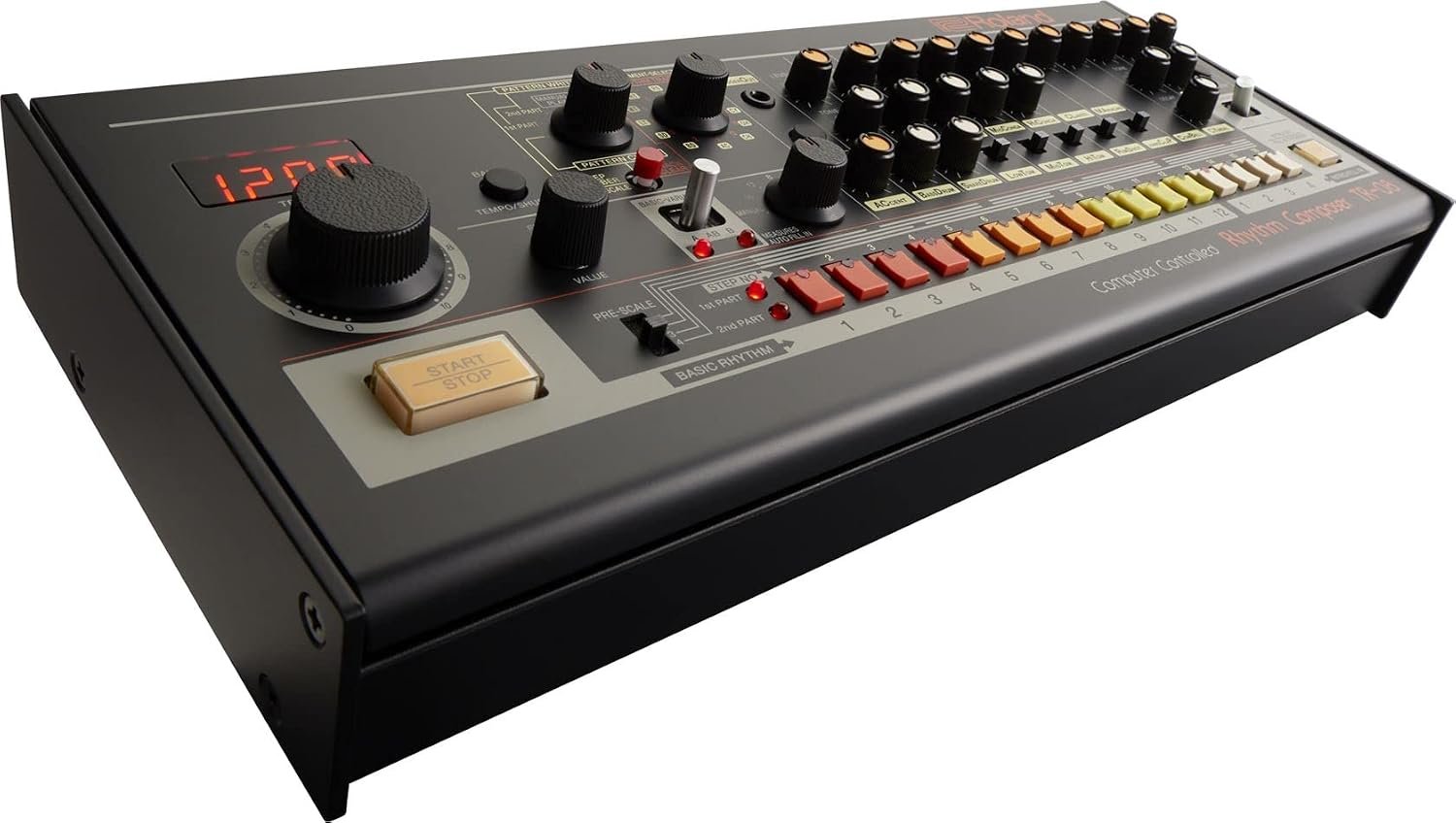
The TR-08 is small enough to sit comfortably on a desk beside an audio interface, pedalboard or practice amp.
That compact format makes it particularly appealing for home studios where space is limited. It does not dominate the desk, yet it gives you a dedicated hands-on rhythm tool rather than forcing you to build every drum pattern inside recording software.
For guitarists who prefer turning knobs and pressing buttons instead of spending all their time looking at a computer screen, that physical workflow has a lot of appeal.
Useful for Practice Sessions
Practising with a rhythm machine can be more engaging than practising with a metronome alone.
You can create a groove that suits the style you are working on, then repeat sections until the guitar part locks in properly. This is especially useful for funk, rock, indie, electronic music and any style where the relationship between guitar and drums is important.
It also gives solo practice sessions a little more energy. Instead of hearing only the guitar, you have a rhythmic foundation underneath everything you play.
Home Recording Possibilities
The TR-08 can also become part of a simple home-recording setup.
A guitarist can sketch out a rhythm, record a guitar part over it and develop the arrangement from there. Even if the final track eventually uses different drums, having a solid groove early in the writing process can make arranging much easier.
That makes the unit useful not only as a practice companion, but also as a songwriting and demo-building tool.
Who Is It Best Suited To?
The Roland TR-08 makes the most sense for guitarists who enjoy building their own backing rhythms, writing songs at home or experimenting with electronic drum sounds.
Players who mainly want a simple beat to practise scales against may not need something this involved. But for anyone who likes shaping the rhythm as much as playing over it, there is considerably more creative room here.
Drawbacks to Know
The Roland TR-08 will not be the right choice for every guitarist.
Its biggest limitation is that it is far more involved than a simple metronome or basic backing-track app. If you only want a steady beat for scale practice, there are easier and cheaper ways to get there.
The compact controls can also feel a little cramped, especially if you prefer larger knobs and a more spacious layout. It is designed to be portable, so some players may need a little time to get comfortable with the smaller interface.
There is also a learning curve. To get the best from it, you need to spend some time understanding the sequencing and pattern controls rather than expecting instant results straight out of the box.
Finally, the TR-08 has a very specific drum-machine character. That is part of its appeal, but guitarists looking for natural acoustic drum sounds may prefer software drums or a different hardware solution.
For the right player, these drawbacks are manageable. But it makes most sense for someone who actually wants to build and shape rhythms, not just switch on a beat and start playing.