Capturing Studio-Quality Tones at Home
Amazon Associate Disclaimer
As an Amazon Associate, we may earn from qualifying purchases. This comes at no extra cost to you and helps support our website.
Is Your Home Recording Setup Holding You Back?
You’ve spent hours perfecting your guitar parts. You’ve written a killer riff, nailed the melody, and you’re ready to lay down your tracks. You fire up your recording software, plug in your guitar, and start playing. But something’s missing. The tone that sounds so incredible in your practice room just isn’t translating to your recordings. It feels flat, lifeless, and nothing like what you hear in your head.
This is a frustration that virtually every home recorder has experienced. Capturing the magic of your playing in a recording is a challenge that goes beyond just having a good guitar and amp. The recording environment, the signal chain, and the tools you use all play a crucial role in the final sound.
The good news is that you don’t need a million-dollar studio to get professional-sounding guitar recordings. You just need to understand a few key principles and choose the right tools for the job. With the right approach, you can capture tones that rival those from commercial studios, all from the comfort of your own home.
The Home Recording Challenge
Recording at home presents unique challenges that you don’t face in a professional studio. The room acoustics might be less than ideal. You might be dealing with noise from neighbours or traffic. And your equipment might not be top-of-the-line studio gear. But these limitations don’t mean you can’t get great results.
The key is to work with your environment rather than against it. This means making smart choices about your signal chain and your recording techniques. It also means choosing gear that is designed to perform well in less-than-perfect conditions.
One of the biggest advantages of home recording is the ability to take your time. You don’t have to worry about expensive studio time ticking away. You can experiment, try different approaches, and find the sound that works best for your music. This creative freedom is one of the reasons why so many great recordings are now being made in home studios.
The Importance of a Clean Signal Chain
Your recording signal chain is the path your guitar signal takes from your instrument to your recording software. Every element in this chain affects your tone. A clean, well-designed signal chain is essential for capturing high-quality recordings.
At a minimum, you need your guitar, some effects if you use them, a way to get your signal into your computer, and your recording software. The quality of your audio interface and the integrity of your signal chain will have a huge impact on the final sound.
Guitarists often underestimate the importance of their effects pedals in the recording chain. The pedals you use in your practice room are the same pedals that will be shaping your recorded tone. If they’re noisy, unreliable, or poorly designed, that will translate directly into your recordings. This is why choosing quality gear is so important.
The Wah Pedal in the Studio
The wah pedal is a classic studio effect that has been used on countless legendary recordings. From the psychedelic sounds of the 1960s to the funk and rock tracks of the 1970s and beyond, the wah has left its mark on music history. It’s a tool that adds movement, expression, and character to guitar parts.
In the studio, a wah pedal can serve many purposes. It can be used subtly to add colour to a rhythm part, or dramatically to create sweeping, vocal-like lead lines. It can even be used as a filtering effect to shape the overall frequency balance of your guitar tone.
However, not all wah pedals are created equal. Some are noisier than others, which can be a problem in the quiet passages of a recording. Some have a narrow sweep that limits their expressiveness. And some are simply too large to fit conveniently into a home recording setup. This is where thoughtful gear selection becomes important.
The Problem with Pedalboard Real Estate
Home recording spaces are often limited. You might be working in a corner of your bedroom, a spare room, or even a closet. Every square inch of space is valuable. A large pedalboard can take up a significant portion of your workspace, leaving less room for your computer, audio interface, and other essential recording tools.
This is where compact pedals really shine. A smaller pedalboard footprint means more space for other equipment. It also means less visual clutter, which can help you stay focused and creative during recording sessions. A clean, organised workspace is conducive to creative work.
When you’re recording, you want to be able to reach your pedals easily without having to stretch or contort your body. A compact board placed conveniently on your desk or on the floor near your recording position makes it easy to engage effects when you need them.
Getting Your Tone Right at the Source
Experienced recording engineers will tell you that the most important part of the recording process is getting the sound right at the source. If your guitar tone doesn’t sound good before it hits your audio interface, no amount of EQ or processing will fix it in the mix.
This means you need to spend time dialling in your tone before you hit record. Your amplifier settings, your pedal settings, and your playing technique all need to be working together to create the sound you want. This is especially important with effects like wah, which can dramatically alter your frequency response.
Taking the time to get your wah pedal set up correctly can make a huge difference in your recordings. The right sweep, the right voicing, and the right placement in your signal chain will ensure that your wah parts sound exactly as you envision them. Rushing through this process is a recipe for disappointment.
How Compact Pedals Fit the Studio Environment
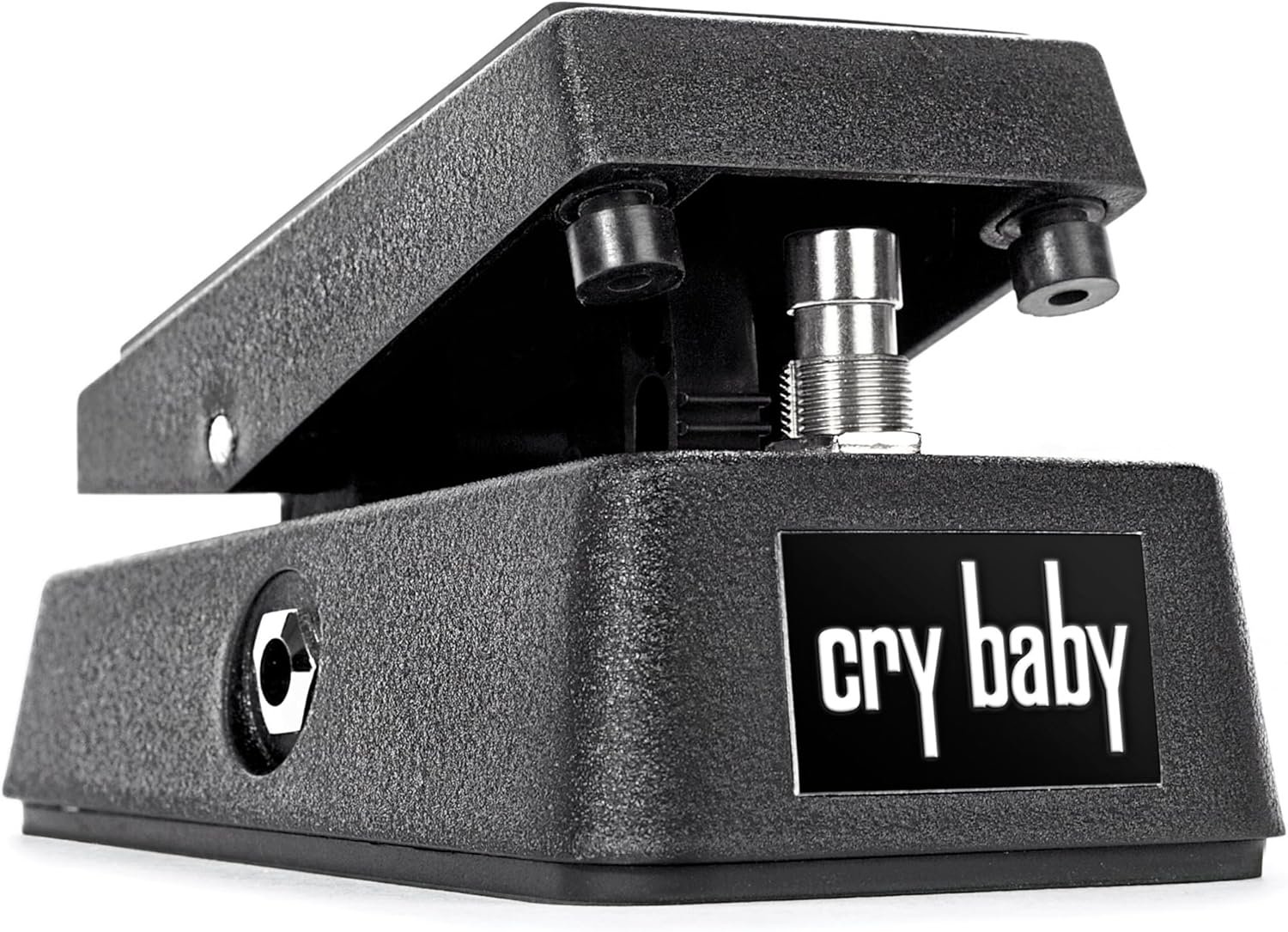
The Jim Dunlop CBM 95 Crybaby Mini Wah Pedal is a great example of a pedal that is perfectly suited to the home recording environment. Its compact size makes it easy to integrate into a small studio setup. It doesn’t take up much space on your desk or floor, leaving room for other essential gear.
But the benefits go beyond just size. The Crybaby Mini is designed to deliver the legendary Crybaby sound that has been a studio staple for decades. Its Red Fasel inductor ensures a smooth, vocal-like sweep that is perfect for expressive recording parts. Whether you’re laying down a subtle rhythm part or a soaring lead, this pedal can deliver the tone you need.
The internal voicing options are another asset for the home recorder. Being able to switch between different wah characters without changing pedals is incredibly convenient. It allows you to tailor the effect to different songs, different guitars, and different recording contexts without cluttering your workspace with multiple pedals.
Dealing with Noise in Your Recording
One of the biggest challenges in home recording is unwanted noise. Hum, buzz, and hiss can all creep into your recordings and ruin otherwise great takes. Effects pedals can sometimes introduce noise into your signal chain, especially if they’re not well-designed or properly powered.
The Crybaby Mini is designed with low-noise components, including its legendary inductor, which helps keep your signal clean. This is important for recording, where the quiet parts of your performance can be just as important as the loud parts. You don’t want unwanted noise distracting from your playing.
The pedal’s true bypass switching is also beneficial for recording. When the pedal is disengaged, your signal passes through without colouration or added noise. This means you can keep the wah on your board at all times, using it only when you need it, without worrying about it affecting your clean tone.
The True Bypass Advantage
True bypass is a feature that many guitarists look for in pedals, and for good reason. When a pedal has true bypass, the signal path is completely disconnected from the pedal’s circuitry when the effect is off. This means your guitar signal passes through without being affected by the pedal’s electronics.
For recording, this is a significant advantage. You want your clean tone to be as pure and uncoloured as possible. True bypass ensures that your wah pedal doesn’t add any unwanted colouration or tone suck to your signal when it’s not in use.
The Crybaby Mini features true bypass, making it an excellent choice for recording applications. You can keep it on your board or on your desk, use it when you need that expressive wah sound, and know that your clean tone remains pristine when the pedal is disengaged.
Capturing Dynamic Performances
One of the things that makes wah pedals so expressive is their dynamic response. The way you rock the pedal, the speed of your sweep, and the timing of your movements all contribute to the character of the effect. This makes the wah a deeply personal and expressive tool.
When you’re recording, this expressiveness is a huge asset. It allows you to add nuance and feeling to your parts that you can’t get with other effects. A well-executed wah part can elevate a track from good to great, adding a layer of emotion and interest that grabs the listener’s attention.
The Crybaby Mini’s smooth sweep and responsive feel make it ideal for capturing these dynamic performances. Whether you’re recording a subtle, slow sweep or a fast, aggressive wah part, the pedal responds accurately to your foot movements. This allows you to focus on your playing, knowing that your gear will translate your intentions faithfully into the recording.
The Versatility of a Compact Wah in the Mix
In the mixing stage, having a well-recorded guitar part makes your job much easier. A part that sounds good in isolation will also sound good in the context of the full mix. This saves you time and effort during the mixing process, allowing you to focus on balance and creative effects rather than fixing problems.
The versatile nature of the Crybaby Mini’s voicing options means you can record wah parts that fit various musical contexts. Whether you’re working on a funk track that needs a sharp, percussive wah, a blues track that calls for a warm, vocal sound, or a rock track that requires an aggressive filter effect, this pedal can deliver.
This versatility makes it a valuable tool in any home recording setup. Instead of needing multiple wah pedals or complex processing chains, you have a single, compact unit that can cover a wide range of sounds. This simplicity is a huge advantage in a home studio environment.
Final Thoughts on Recording at Home
Home recording has democratised the music-making process. Anyone with a computer and some basic gear can now create professional-quality recordings from their own home. But to get the best results, you need to pay attention to the details.
Your signal chain, your recording environment, and your choice of gear all play a role in the final sound. Choosing high-quality, reliable tools that are suited to the home recording environment is essential. A compact wah pedal like the Crybaby Mini is a perfect example of gear that’s designed with the modern home recordist in mind.
It’s small enough to fit into a cramped studio space, quiet enough to keep your recordings clean, and versatile enough to cover a wide range of musical styles. For any guitarist recording at home, it’s a worthwhile addition to the setup.
Remember, great recordings start with great performances and great tones. By choosing gear that helps you achieve both, you’ll be well on your way to capturing studio-quality sounds from your home studio.
Check It Out!