
Sculpting Chaos: GP-200 Sound Playground
Amazon Associate Disclaimer As an Amazon Associate, we may earn from qualifying purchases. This comes at no extra cost to you and helps support our website.
Carving High‑Energy Textures with Valeton GP‑200
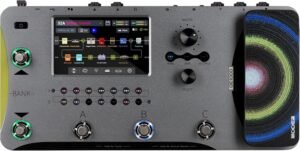
The Valeton GP-200 is a compact chaos sculptor with intention: 140 built-in effects, 45 amp models, and 40 IR cabinet simulations running at 24‑bit/44.1 kHz. Translation for the noise-loving explorer: a stable digital core you can push, slam, and finesse without the tone disintegrating into brittle rubble. With nine simultaneous blocks and an adjustable signal chain, you can place modulation pre-dirt for swirl, or stack time-based tails after the amp for cinematic width. That flexibility invites performance-first tinkering—twist, stomp, listen, refine—until your hands and ears agree.
The 4.3-inch color LCD matters more than it seems. It turns deep editing into a fast, visual sweep. You see modules, you grab the PARA knob, and parameters yield quickly. No buried guessing. That immediacy encourages fearless experimentation, the kind that sparks riffs you wouldn’t chase on a menu maze. The GP-200 reads like a stage-ready workstation but behaves like an instrument.
Expressive Gain, Controlled Mayhem
Stacking drives on this unit feels like wiring impulses to intention. Use the amp section’s real-time controls to shape the core voice, then feed it overdrive for chew or distortion for serrated edges. Flanger and chorus can sit pre-amp for a ripped-tape wobble, or glide post-amp for stained-glass shimmer. Reverb isn’t an afterthought; you can let a hall bloom behind a tight delay, or keep it dry and combative for riff workouts.
If you live for dynamics, the expression pedal unlocks that visceral swell. Assign it to drive level for swan-dive gain throws, to delay feedback for runaway repeats you can ride, or to reverb mix for tidal space. The customized LEDs and push controls make it easy to mark what matters so your feet can think faster than your hands.
Rhythm Engines for Relentless Practice
One hundred built-in drum rhythms and a 90-second looper are more than features—they’re a practice contract. Pick a beat that challenges your pocket, then loop a part and rehearse micro-variations: alter pick attack, subdivide accents, rewrite a turnaround until it breathes. Short loops are brutally honest; they expose timing drift and force discipline. Long loops become canvases for evolving textures—start bone-dry, then bring in modulation, then add a second loop layer for counter-rhythm.
The looper and drums reduce friction, so ideas survive that fragile first minute. Save the winning version as a preset snapshot and return to it tomorrow with fresh hands. That’s how riffs graduate into songs.
Signal Chain Freedom: Build Your Own Circuit
Nine simultaneous effect blocks and an adjustable chain let you prototype rigs you’ve only imagined. Try this workflow:
- Pre-EQ to sculpt pick transients.
- Fuzz into a mid-forward amp model for harmonic spit.
- Short slapback delay before modulation to thicken without smear.
- Post-amp stereo chorus feeding plate reverb for glide.
- Global EQ to match the room or headphones.
Move modules, listen, repeat. You’ll hear how placement changes articulation—delay-before-dirt reads like extra pick density; delay-after-dirt preserves phrasing. Subtle routing shifts can unlock a hard-stuck part.
IR Cabinets: Space, Wood, and Air
The 40 cabinet sims cover familiar ground, while 20 user IR slots keep you future-proof. Swapping IRs isn’t just taste; it’s context. A tighter IR sharpens palm mutes for modern punch. A darker IR tames icepick highs at low volume. When practicing late, a balanced IR paired with gentle high-cut keeps ears fresh. In a rehearsal, bright IRs help you escape the bass drum’s shadow without over-EQ.
Load third-party IRs to chase venue-like realism through headphones. A consistent IR set across presets creates a unified aesthetic—glue for a setlist’s tonal narrative.
MIDI and FX Loop: External Control Meets Internal Discipline
The FX Loop (send/return) is an invitation to integrate your favorite outboard dirt or time machines without abandoning the GP-200 brain. Put a boutique delay in the loop and save its position per patch. Or drop a parallel path feel by balancing loop level against internal effects.
MIDI I/O means repeatable precision. Map program changes for set sections—intro, verse, hook, bridge—and switch entire sonic worlds with one stomp. Use continuous controllers for live morphing: expression moves on multiple parameters at once, from delay mix to modulation depth to amp gain. With a little setup time, the whole rig becomes choreography, not chaos.
From Couch to DAW with USB and OTG
USB-C turns the GP-200 into a straightforward audio interface at 44.1 kHz, 16- or 24-bit. Direct DI and re-amping support mean you can track a clean safety channel and re-voice it later with different amps and IRs—ideal for late-night takes when neighbors sleep but your brain’s on fire. OTG support extends that portability to iOS/Android devices, so a quick hook idea can become a multitrack sketch without booting a full studio. Headphones in, AUX in for reference tracks, and you’re building parts wherever your hands happen to be.
This workflow bridges practice and production: refine the part with drums and looper, commit a draft via USB, then revisit tone with new IRs before mixing. Creativity stays nimble because the tech friction stays low.
Global Settings, Real Rooms
The GP-200’s Global menu and outputs help you adapt to reality. XLR balanced outs to PA or interface, unbalanced outs to amp or FRFR, a GND/LIFT to keep ground loops quiet, and a phones jack for isolation. Use Global EQ to correct for room boom or to keep stage sound polite while preserving in-ears clarity. Small moves—1 dB cuts here, a touch of high shelf there—protect your ears and your patience.
That practicality lets you push sonics without derailing a rehearsal. When logistics behave, you can focus on hands, phrasing, and the shape of the set.
Preset Strategy: 198 Starting Lines
With 198 presets, it’s tempting to hop forever. Better plan: curate five anchors you actually play.
- Clean articulate: compressor, light chorus, short room, IR tuned for sparkle.
- Crunch rhythm: shared IR with a narrower mid bump, slapback pre-mod.
- Solo lead: same amp core, delay post-amp, plate reverb, expression on gain/level.
- Ambient bed: tremolo -> stereo delay -> hall verb for pads.
- Fuzz texture: pre-EQ sculpt, aggressive cab sim, light post-gate for stops.
Keep them in adjacent footswitch slots, then color within those lanes. Consistency in core voice, variability in effects—less menu, more music.
Hands-On Control: Footswitch Logic
Eight footswitches mean immediate access: patches, toggles, tap tempo. Assign one to a tempo-synced delay and another to modulation on/off. Use tap to lock your repeats to a drummer’s push/pull. A dedicated switch for solo boost (via amp level or EQ) solves the age-old “I can’t hear the lead” without fighting the mixer. Ergonomic footwork removes mental clutter so your right hand can flirt with reckless precision.
Practice Architecture: Make Reps Musical
Use the drum machine to set tempos slightly above comfort, then rehearse transitions: clean to crunch, crunch to lead, lead to ambient, back to clean. Each move should be one stomp, rhythm intact. Record short passes via USB, listen back, fix the noisy gaps with better muting or smarter gate thresholds. That’s how technique sneaks forward while you’re “just playing.”
For timing drills, keep modulation off, run a metronome-like drum pattern, and loop a single-bar riff. Push accents against the beat, then lay them back. Reintroduce chorus or delay and keep the same timing discipline. This merges feel with texture, not one at the expense of the other.
Home Sessions: Full Sound at Friendly Volume
Low-volume playing doesn’t have to feel small. Pick an IR that favors body over bite, add a short pre-delay reverb for depth, and run a modest stereo spread on headphones. Set MASTER to a whisper, then let the richness come from space, not loudness. If you like tactile response, use the expression pedal as a virtual master volume after the amp block, so gain structure remains steady while overall level breathes with your phrasing.
AUX IN helps you shed to tracks without DAW overhead. Match levels once, save the patch, and future sessions become plug-and-play.
Rehearsal Prep: Repeatable Scenes
For a tight rehearsal flow, map each song’s sections to neighboring patches with consistent loudness. Use the same IR family so the band hears a coherent guitar arc across the set. With MIDI clock or disciplined tap tempo, your dotted-eighths and triplets will land where the drummer expects. Balanced XLRs to the mixer keep the signal sturdy; unbalanced outs to an FRFR or amp give you a personal reference. Soundcheck becomes quick and civil—more time left for dialing transitions and endings.
Hardware Specs That Serve the Hands
A 24-bit high-performance converter and 110 dB SNR give headroom for expressive touch without digital glare. The 9 V DC power requirement keeps it standard; the included 9 V supply means plug-in-and-go. USB 2.0 Type‑C handles audio and MIDI, while 5‑pin DIN lets legacy gear stay in the conversation. At 34.5 x 22 x 6.2 cm and a manageable weight, it sits like a serious floor unit, not a furniture commitment. Those details keep the ritual simple: power, connect, play.
Small Tweaks, Big Payoffs
- High-cut post-cab to tame fatigue in long sessions.
- Gate before fuzz for start-stop riffs; gentle release to avoid chatter.
- Parallel reverb feel by lowering mix and extending decay—space without wash.
- Tap tempo every chorus entry to glue delay to vocal phrasing.
- Save new patches with meaningful names tied to songs or roles: “CleanArtic,” “CrunchVerse,” “LeadLift,” “PadBridge,” “FuzzGate.”
Each micro-adjustment keeps the instrument responsive and the player curious.
Closing Perspective: A Platform for Expressive Chaos
The Valeton GP-200 functions as a tone laboratory that rewards aggressive curiosity and careful ears. Amp models forge the backbone, IRs carve the space, and flexible routing shapes how your pick talks back. Drums and looper turn practice into composition, while USB, OTG, and MIDI connect couch sketches to serious sessions. Whether you chase serrated riffs, glassy cleans, or sprawling textures, this unit slots into daily playing with minimal friction and maximum invitation to experiment. It’s a reliable place to make noise on purpose—and to keep making it tomorrow, tighter and louder in all the right ways.
Check It Out!