Fender CD-60SCE Acoustic-Electric Guitar
As an Amazon Associate I earn from qualifying purchases.
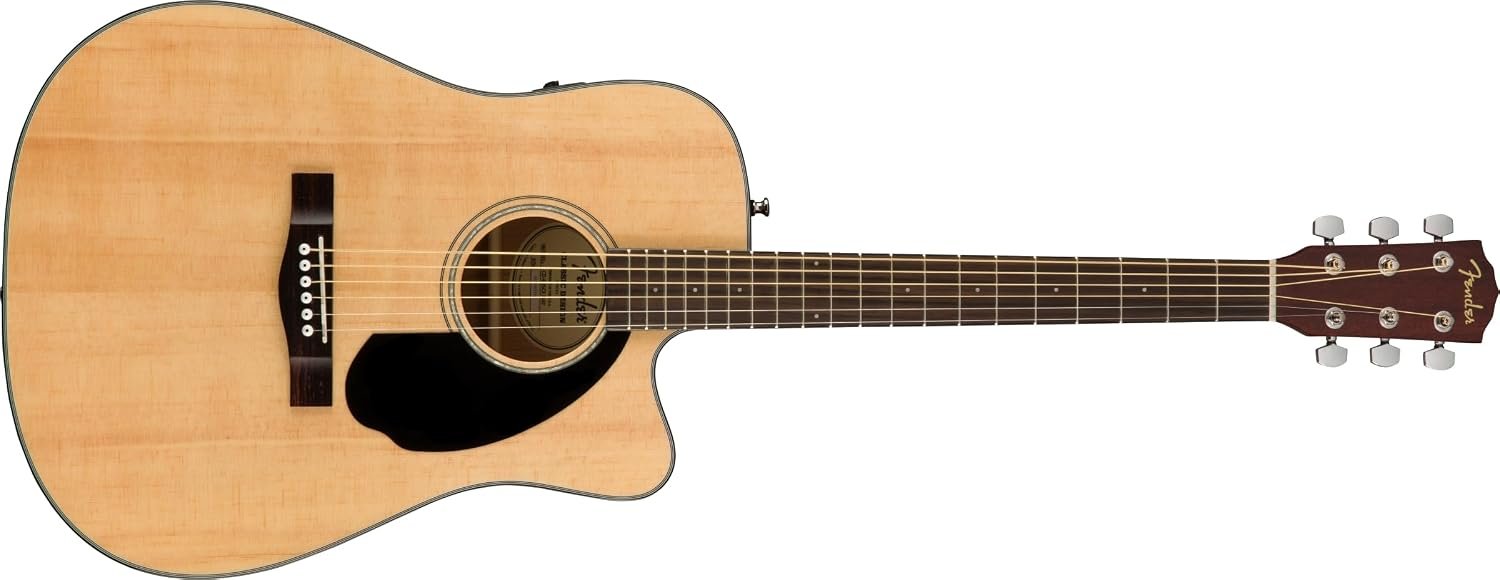
The Fender CD-60SCE is the kind of acoustic-electric guitar that makes sense for players who want one instrument to cover several jobs. Its dreadnought body gives it the familiar full-bodied acoustic shape, while the cutaway makes higher fret access easier when you want to move beyond open chords. Add the built-in Fishman electronics and it becomes equally at home for unplugged practice, home recording or plugging into an acoustic amp or PA. The natural finish keeps the look traditional, and the solid spruce top gives the guitar a more serious specification than many entry-level acoustics.
Solid Spruce Top and Dreadnought Body
A solid spruce top is one of the more worthwhile features here. Spruce is commonly used on acoustic guitars because it balances clarity, projection and responsiveness without making the sound feel overly bright or thin. As the guitar is played over time, a solid top can also develop a little more character than a basic laminated construction.
The dreadnought body gives the CD-60SCE a broad, familiar acoustic voice with enough presence for strumming, chord work and general accompaniment. It is a fairly substantial body shape, so it tends to feel fuller against you than a smaller concert-style acoustic, but that extra size is part of what gives a dreadnought its strong, room-filling character.
Fishman Electronics for Plugged-In Playing
The built-in Fishman pickup and preamp make the CD-60SCE much more flexible than a purely acoustic guitar. It means you can plug straight into an acoustic amplifier, PA system or recording setup without needing to add an external pickup later.
That is especially useful for players who practise acoustically at home but also want the option to perform, record ideas or rehearse with other musicians. The controls are built into the guitar, so the setup stays tidy and practical rather than turning into a collection of extra boxes and cables.
Comfortable Neck and Cutaway Access
The CD-60SCE is designed to feel approachable rather than demanding. Its neck profile is intended to sit comfortably in the hand, which matters if you are practising for longer stretches or moving between chord work and single-note playing.
The cutaway is another practical touch. It gives you easier access to the upper frets, so the guitar feels less restrictive if your playing moves beyond first-position chords. That makes it a better all-rounder for players who want to mix rhythm work with lead lines, melodic parts or more adventurous arrangements.
A Practical Guitar for Home, Rehearsal and Stage
One of the strengths of the CD-60SCE is how easily it can move between different situations. At home, you can simply pick it up and play acoustically without any setup. For rehearsal or small performances, the onboard electronics let you plug in quickly without changing guitars.
That flexibility also makes it a sensible choice for players who are still figuring out exactly how they want to use an acoustic guitar. You are not locked into purely unplugged playing, and you do not need to buy a separate pickup later if you decide to start recording or performing.
Who the Fender CD-60SCE Suits Best
The CD-60SCE makes the most sense for players who want an acoustic guitar that can cover more than casual home practice. It is approachable enough for newer players, but it also has the features needed for rehearsals, small gigs and straightforward home recording.
It should particularly appeal to singer-songwriters, rhythm players and anyone who wants a familiar dreadnought feel with the added flexibility of a cutaway and built-in electronics. It is also a sensible option for electric guitarists looking for an acoustic that does not feel too limiting when they start exploring lead lines or higher fret positions.
Drawbacks
The CD-60SCE is versatile, but it will not suit every player. A dreadnought body is relatively large, so smaller players or anyone who prefers a more compact guitar may find it less comfortable than a concert or parlour-style acoustic, particularly when playing seated for long periods.
It is also worth remembering that built-in electronics add convenience rather than replacing a dedicated recording setup. Players chasing a very polished studio acoustic sound may still prefer to record with microphones or higher-end external gear.
The cutaway and onboard preamp make the guitar more flexible, but they also mean this model is aimed more at practical all-round use than at players looking for a stripped-back traditional acoustic. If you only ever intend to play unplugged at home, a simpler acoustic without electronics may offer better value for your needs.
Take a Closer Look
If the combination of a traditional dreadnought body, solid spruce top, cutaway access and built-in Fishman electronics sounds right for the way you play, you can take a closer look at the Fender CD-60SCE from the box below.
Check It Out!