
Making Short Practice Sessions Count
The Surprising Power Of Ten Minutes A Day
As an Amazon Associate, I earn from qualifying purchases.
Why Bigger Practice Sessions Aren’t Always Better
It’s easy to believe that becoming a better guitarist requires huge amounts of free time.
Many players imagine that real progress only happens during long practice sessions that stretch for hours.
The reality is often much simpler.
Most guitarists improve through repetition, not marathon sessions.
A player who spends fifteen focused minutes with their guitar five days a week will often make more progress than someone who plays for three hours once every few weeks.
Music rewards consistency.
Every time you pick up the guitar, you’re reinforcing skills, improving coordination, and building familiarity with the instrument.
Those small sessions add up surprisingly quickly.
The Challenge Of Finding Time
Modern life doesn’t leave much room for hobbies.
Work schedules, family commitments, studies, and everyday responsibilities compete for attention.
For many people, the biggest challenge isn’t learning guitar.
It’s finding time to play it.
This is why practical practice habits matter so much.
Rather than waiting for the perfect opportunity, successful players learn to make use of the time they already have.
Ten minutes before dinner.
Twenty minutes after work.
A quick session before bed.
These moments may seem insignificant on their own, but together they become the foundation of steady improvement.
Making Practice Easier To Start
One thing experienced musicians often discover is that starting is usually the hardest part.
Once you’re playing, continuing is easy.
Getting started is where most people struggle.
That’s why a simple setup can make such a difference.
When your guitar and amplifier are ready to use, there’s less resistance between deciding to practise and actually doing it.
Reducing Everyday Friction
Every extra step creates another opportunity to delay playing.
Complicated equipment.
Confusing controls.
Lengthy setup routines.
They all make practice feel slightly less appealing.
A straightforward amplifier removes many of those barriers.
Instead of spending time figuring things out, players can focus on making music.
That simplicity often encourages more frequent use.
Why Enjoyment Leads To Consistency
Many guitarists spend too much time focusing on discipline and not enough time focusing on enjoyment.
The truth is that people naturally return to activities they enjoy.
If practice feels rewarding, you’ll want to do it again tomorrow.
If it feels frustrating or complicated, you’ll gradually avoid it.
This is one reason why sound quality matters, even during practice.
A satisfying tone can make ordinary exercises feel more engaging.
Simple scales become more enjoyable.
Chord changes feel more rewarding.
Learning songs becomes more immersive.
And when playing feels enjoyable, consistency becomes much easier.
Turning Small Sessions Into Real Progress
There is a common misconception that short practice sessions aren’t worthwhile.
In reality, many important skills develop perfectly well in brief periods.
Fifteen minutes is enough to:
- Practise chord transitions
- Learn part of a song
- Improve timing
- Develop picking accuracy
- Work on scales
- Explore new sounds
- Strengthen finger coordination
What matters most is regular repetition.
Skills improve gradually through hundreds of small interactions with the instrument.
Not through occasional bursts of activity.
The Value Of Having A Dedicated Practice Setup
Many players notice a significant change when they create a space specifically for guitar.
It doesn’t need to be a full studio.
In fact, it can be a small corner of a bedroom, office, or living room.
The goal is simply accessibility.
When the guitar is visible and the amplifier is ready to use, practice becomes easier to fit into daily life.
A Guitar Within Reach Gets Played More
This sounds obvious, but it’s remarkably true.
Instruments that are hidden away tend to stay hidden.
Instruments that are easy to access tend to be played more often.
A practical amplifier becomes part of that environment.
It’s there when inspiration appears.
It’s ready when a few spare minutes become available.
And it helps transform intention into action.
Exploring Creativity During Short Sessions
Not every practice session needs a strict objective.
Sometimes the most valuable moments happen unexpectedly.
A riff appears while warming up.
A chord progression sparks a songwriting idea.
An experiment with tone leads somewhere interesting.
These moments rarely happen when you’re thinking about being productive.
They happen when you’re relaxed and simply enjoying the process of playing.
The more frequently you pick up your guitar, the more opportunities you create for creativity to emerge naturally.
Suitable For Different Types Of Players
Short practice sessions benefit almost everyone.
Beginners
New players often absorb information better in manageable chunks rather than overwhelming marathon sessions.
Busy Professionals
People with demanding schedules can still make meaningful progress through regular short sessions.
Returning Guitarists
Former players rebuilding confidence often find shorter sessions easier to maintain.
Hobby Musicians
Casual players frequently value enjoyment and consistency over rigid practice structures.
The common theme is sustainability.
A routine only works if it fits comfortably into real life.
Why Simplicity Often Wins
The guitar world can sometimes make things feel more complicated than they need to be.
More equipment.
More settings.
More options.
Yet many experienced players eventually realise that the best setup is often the one that encourages them to play.
A practical amplifier supports that goal beautifully.
It doesn’t demand attention.
It doesn’t create obstacles.
It simply helps make regular playing easier.
And regular playing is where progress happens.
Frequently Asked Questions
Are short guitar practice sessions effective?
Yes. Consistent short sessions often produce excellent long-term results.
How long should a beginner practise?
Many beginners benefit from ten to twenty minutes of focused practice per day.
Can I improve without practising for hours?
Absolutely. Consistency is usually more important than lengthy sessions.
Why does a simple setup matter?
Simple setups reduce friction and make it easier to start playing regularly.
Is home practice enough for most players?
For many hobbyists and learners, home practice forms the foundation of their musical development.
Does sound quality affect motivation?
Many players find that enjoyable sound encourages them to practise more frequently.
When This Fits Your Musical Goals
Not every guitarist has hours available each day.
Most people are balancing music alongside everything else life demands.
That’s why short, enjoyable practice sessions can be so effective.
They fit into real schedules.
They feel manageable.
And most importantly, they keep the guitar present in everyday life.
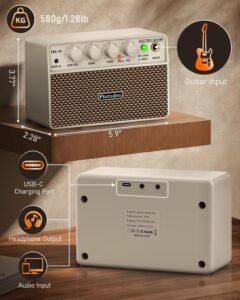
A straightforward amplifier naturally supports this style of playing. It helps remove common barriers, encourages regular use, and makes those small windows of practice more enjoyable.
Over time, those ten or fifteen minute sessions become something much bigger.
They become a habit.
And habits are often what separate players who keep improving from those who stop playing altogether.
Check It Out!